Patient Reviews Skin Store in a new tab Request Consult Book Non-Surgical Appointment in a new tab
Nav background media

A More Anatomically Precise Approach to Facial Aging

Most of what people associate with an "overdone" facelift comes from techniques that tighten skin without addressing the deeper structures beneath it. The deep plane facelift works differently. Dr. Don Griffin releases and repositions the SMAS layer, the connective tissue that supports the cheeks and jowls, moving it along with the skin so the entire face lifts as one unit instead of looking stretched at the surface. Curious whether a deep plane approach is right for your face? Schedule a consultation with Dr. Griffin to find out.

What Is a Deep Plane Facelift?

Traditional facelifts, including the SMAS plication technique, work primarily on the skin and the surface of the SMAS layer. A deep plane facelift goes further, releasing the SMAS from the deeper facial ligaments that anchor it to bone, then repositioning the entire composite of skin, fat, and muscle together along a more vertical vector. Because the ligaments themselves are released rather than just tightened, this technique can correct sagging in the midface and nasolabial folds that surface-level facelifts typically can't reach.

Banner media
doctor smiling

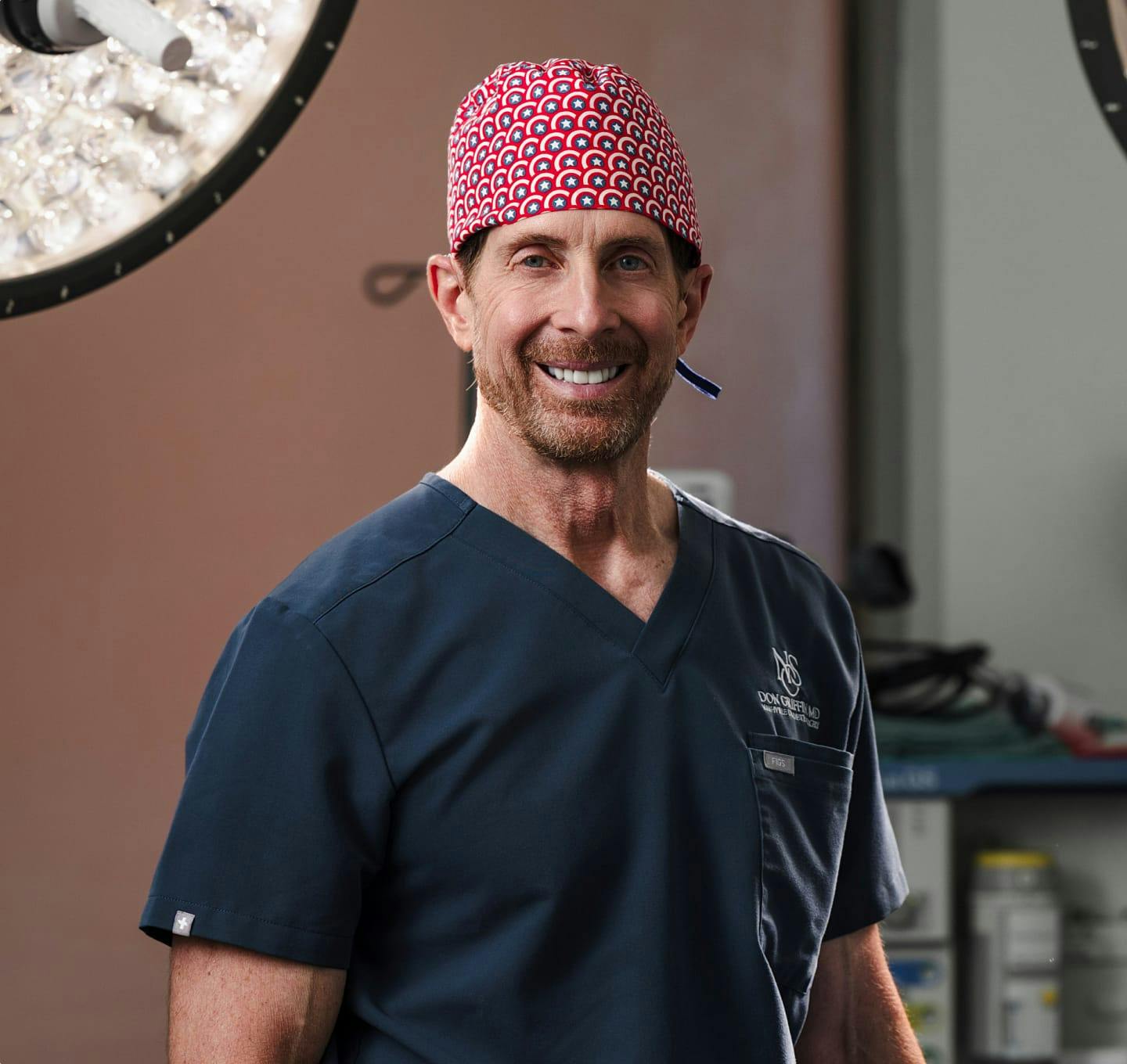
Meet Dr. Don Griffin

Gallery media

Your Nashville Deep Plane Facelift Surgeon

Dr. Don Griffin is a dual board-certified plastic surgeon and Fellow of the American College of Surgeons, a credential held by fewer than 1 in 5 cosmetic surgeons practicing today. His fellowship training in plastic and reconstructive surgery at the University of Alabama at Birmingham gave him the technical grounding in facial anatomy that deep plane technique demands. Dr. Griffin often describes deep plane work as some of the most involved surgery he performs, requiring precise dissection around the facial nerve branches that run through this layer, work that rewards experience over shortcuts.

Why Patients Choose the Deep Plane Technique

Patients researching facelift options often land on deep plane after finding that a standard SMAS facelift wouldn't fully address their concerns.

  • Correction of deeper midface sagging that skin-only techniques miss
  • Movement along the face's natural support lines, producing a less pulled appearance
  • Longer-lasting results, since the underlying support structure is repositioned, not just the skin
  • Improved definition along the jawline and nasolabial folds
  • A more natural relationship between the cheek and jawline after healing
Background media

Are You a Good Candidate for a Deep Plane Facelift?

You may be a good candidate for a deep plane facelift in Nashville if you have moderate to significant sagging in the midface and jowls, particularly if you've noticed that the nasolabial folds and cheek volume have dropped rather than just the skin along the jaw. This technique tends to benefit patients with more advanced signs of aging more than a milder SMAS lift would.

Good candidates are in good general health and don't smoke, since the dissection involved requires healthy blood supply to the repositioned tissue. During your consultation, Dr. Griffin will evaluate your ligament laxity and facial structure directly to confirm whether deep plane technique is appropriate, or whether a different approach would serve you better.

Deep Plane Versus SMAS Facelift

This is the most common comparison patients bring up, and the distinction comes down to which layer is actually moved.

  • A SMAS facelift tightens the surface of the SMAS layer through plication or a limited elevation, improving the jawline without releasing the deeper ligaments.
  • A deep plane facelift releases those ligaments entirely, allowing the SMAS, fat, and muscle to move together as one unit along a more natural vector.

Dr. Griffin will recommend the technique suited to your anatomy and degree of sagging rather than defaulting to the deep plane for every patient.

office image

“Dr. Griffin and his entire team were absolutely incredible from the moment I walked into my first consultation. He truly took the time to listen, made me feel heard, and ensured I fully understood my options while setting realistic expectations. I especially appreciated his honesty and thoughtful guidance on the best surgical approach for my specific case—something I hadn’t experienced with other surgeons.”

S Peterson

Quote media

What to Expect During Your Deep Plane Facelift

Deep plane facelift surgery in Nashville is performed at our private, accredited surgical center under general anesthesia, typically taking four to six hours given the precision the dissection requires. The added time reflects the technical demands of working safely around the facial nerve while repositioning the deeper tissue layers. Dr. Griffin will walk you through his specific surgical plan for your face during your consultation, including where incisions will be placed and how your particular pattern of sagging will be addressed. Most patients stay overnight for observation before returning home with detailed recovery instructions.

Recovery and Results Following a Deep Plane Facelift

Recovery from a deep plane facelift generally takes a bit longer than a standard facelift, given the more extensive dissection involved. Most patients take two to three weeks off work, with swelling and firmness that can take longer to fully resolve than with a surface-level lift. Because the deeper tissue layer itself has been repositioned, results tend to hold their shape for longer as the face continues to age. Our team checks in with you regularly throughout recovery, monitoring healing around this more involved surgical area.

mirror

Why Choose Nashville Cosmetic Surgery?

Deep plane facelift surgery calls for a level of anatomical precision that not every surgeon regularly performs, and Dr. Griffin's decades of specialized facial experience reflect exactly that depth of skill. Our private surgical center and concierge-style care mean this more involved procedure receives the same personal attention throughout your recovery as any surgery we perform.

Banner media

Hair Restoration Frequently Asked Questions

Why does a deep plane facelift take longer than a standard facelift?

The additional time reflects the more extensive dissection required to safely release the ligaments and reposition the SMAS layer around the facial nerve.

Will a deep plane facelift leave more visible scarring than a SMAS facelift?

No. Incision placement is similar between the two techniques, since the difference lies in what happens beneath the skin, not the incision pattern itself.

How much longer do deep plane results last compared to a SMAS facelift?

Because the underlying support structure is repositioned rather than simply tightened, many surgeons find that deep plane results hold their shape longer. However, individual aging and results vary.

Is a deep plane facelift riskier than other facelift techniques?

The dissection involved requires more precision because of its proximity to the facial nerve. This is why experience with the deep plane technique is an important consideration when choosing a surgeon.

Can a deep plane facelift be combined with fat grafting or a neck lift?

Yes. Many patients combine a deep plane facelift with fat grafting or a neck lift for a more comprehensive result. Dr. Griffin will discuss whether combining procedures is appropriate for your goals.

Art background media

Schedule a Consultation

Receive the aesthetic care you deserve from one of the best plastic surgeons in Nashville. Contact NCS today to schedule your private consultation with Dr. Don Griffin.

Accessibility: If you are vision-impaired or have some other impairment covered by the Americans with Disabilities Act or a similar law, and you wish to discuss potential accommodations related to using this website, please contact our Accessibility Manager at (615) 206-2937 .
Contact Us