
LOOK GREAT AT ANY AGE
Tummy Tuck in Nashville, TN
HOW CAN A TUMMY TUCK HELP?
A tummy tuck is a popular surgical procedure that can be adjusted to meet the needs of a variety of patients. Generally speaking, tummy tuck works well for treating the following concerns:
- Stretched, sagging abdominal skin
- Lax or torn abdominal muscles, including diastasis recti
- Fat deposits on the abdomen that do not respond to diet and exercise

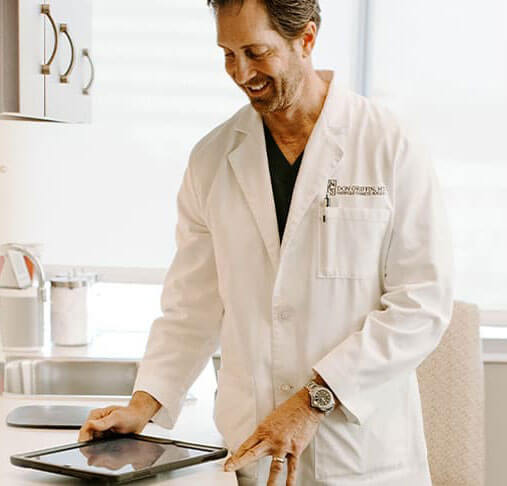
DON GRIFFIN M.D., FACS
Board-certified plastic surgeon Dr. Don Griffin realizes that no two patients are exactly alike — and neither are his surgical plans. Learn more about his background and his unique approach.
YOUR TUMMY TUCK OPTIONS
Dr. Griffin believes in approaching each tummy tuck as a unique, custom procedure. He carefully plans the surgery to help ensure patients achieve the results that complement their bodies. Your options include the following:
- Short-scar tummy tuck: Also called a “mini” tummy tuck, this approach is best for people with minor sagging and laxity, especially if they are limited to the area below the navel. It uses a shorter incision through which Dr. Griffin can remove skin and repair the lower abdominal area.
- Full tummy tuck: This “traditional” version of surgery uses a horizontal incision made just above the pubic area from hip to hip. A smaller incision is also made around the navel to release the skin, which will be pulled down and smoothed. Separated or torn abdominal muscles are repositioned and repaired, and excess skin and stretch marks are removed. This option is ideal for people with excess skin and laxity above and below the navel.
- Circumferential tummy tuck: The most extensive version of tummy tuck surgery uses an incision that encircles the torso to improve the entire abdomen, flanks, and even the uppermost portion of the thighs. This procedure is also called a u201cbody liftu201d and is often indicated for patients who have lost a large amount of weight.
- Lipoabdominoplasty: This technique includes liposuction of the entire abdominal wall in addition to muscle repair and skin excision.

WHAT TO EXPECT
Dr. Griffin performs your tummy tuck while you are under general anesthesia. He begins by making the incisions as discussed during your consultation. He repairs the abdominal muscles and removes excess fat via selective liposuction. He then pulls the overlying skin downward to create a taut, smooth contour, removing the excess. He then closes the incision with sutures.
Tummy tuck surgery is typically an outpatient procedure, but you’ll need someone to drive you home and stay with you for at least the first 24 hours.
We understand the importance of a quick, comfortable recuperation, so we make every effort to ensure a smooth process. However, it’s still crucial to give your body sufficient time to rest and heal properly. Plan to take at least 2 weeks away from work, and potentially longer if you work a physically demanding job.
Frequently Asked Questions
What is the difference between a full tummy tuck and a mini tummy tuck?
A full abdominoplasty addresses the entire abdomen — above and below the navel — and typically includes muscle repair. The incision extends hip to hip in the lower abdomen. A mini tummy tuck is a limited procedure for patients with isolated excess skin and laxity confined below the navel, without significant muscle separation. It uses a shorter incision and does not reposition the navel. Dr. Griffin will determine which approach is appropriate based on your examination.
Will a tummy tuck remove stretch marks?
A full tummy tuck removes the lower abdominal skin, which is where the majority of pregnancy-related stretch marks appear. Stretch marks within the skin excised during surgery are eliminated entirely. Stretch marks above the navel are not removed but may be repositioned slightly downward. Stretch marks on the hips or flanks are not addressed surgically but may be improved with laser treatments at The Skin Lounge.
Can a tummy tuck fix diastasis recti?
Yes. Repairing diastasis recti — the separation of the right and left rectus abdominis muscles along the midline — is a standard component of a full tummy tuck. Dr. Griffin sutures the fascial sheath to restore abdominal wall integrity, which improves both the cosmetic appearance of abdominal protrusion and core functional strength. Many patients notice improved posture and reduced low back discomfort following this repair.
Where is the tummy tuck scar located, and will it be visible?
The tummy tuck incision is placed low in the abdomen, below the bikini line, so it is hidden by underwear and swimwear. The length of the scar depends on the extent of the procedure — it typically runs hip to hip for a full tummy tuck. The scar is initially pink and raised and fades over 12–18 months. Dr. Griffin uses meticulous closure technique to optimize scar appearance, and The Skin Lounge offers scar treatment options to support healing.
Can liposuction be combined with a tummy tuck?
Yes. Liposuction of the flanks, hips, or other areas is frequently combined with a tummy tuck for more comprehensive body contouring. This is a very common combination in mommy makeover surgery. There are limits to how much liposuction can safely be performed simultaneously with a tummy tuck, and Dr. Griffin will determine the appropriate scope based on your anatomy and safety considerations.
What is recovery like after a tummy tuck?
Tummy tuck recovery is more involved than some other cosmetic procedures due to the abdominal muscle repair. Most patients spend the first few days resting with the torso slightly bent to reduce tension on the incision. Return to desk work typically occurs around week 2. Physical activity restrictions usually last 6 weeks. A compression garment is worn during healing. Pain is managed with prescribed medications and is well-tolerated by most patients. Most patients will also have surgical drains for 2–3 weeks post-surgery to remove fluid and support healing.
Should I have a tummy tuck before or after having more children?
If you plan to have more children, it is generally recommended to wait until your family is complete before undergoing a tummy tuck. Future pregnancy stretches the abdominal muscles and skin, which can significantly compromise your results. While a tummy tuck does not affect fertility or pregnancy safety, the aesthetic improvements are best preserved when no future pregnancies are planned.
Am I a good candidate for a tummy tuck?
Good candidates are adults who have excess abdominal skin or muscle laxity that has not responded to diet and exercise, are at or close to their stable goal weight, are non-smokers or willing to stop well before surgery, and have realistic expectations. Significant obesity, active plans for future pregnancy, or certain medical conditions may affect candidacy. Dr. Griffin will assess you thoroughly at your consultation.
How much does a tummy tuck cost in Nashville?
The cost of a tummy tuck at Nashville Cosmetic Surgery depends on the extent of the procedure, whether it is combined with liposuction or other procedures, and anesthesia and facility fees. A full itemized quote is provided at your consultation. Financing options are available. We encourage you to prioritize surgeon credentials and experience when evaluating options in the Nashville market.
Where will my tummy tuck be performed?
Your tummy tuck will be performed in Nashville Cosmetic Surgery's onsite, state-licensed surgical facility. This means your procedure takes place in a dedicated surgical environment that has met the State of Tennessee's rigorous requirements for surgical safety, staffing, equipment, sterilization, and emergency preparedness — not in a shared hospital outpatient department or an unlicensed procedure room. Dr. Griffin and his dedicated surgical team perform every case in the same facility, ensuring consistency, privacy, and a level of personalized care that a hospital setting simply cannot provide.